Your Austin patio is essentially unusable for five months of the year. When temperatures climb past 100°F—which happened 45 days in 2023 alone (Source: National Weather Service Austin/San Antonio, 2024)—that beautiful outdoor space you invested in becomes a heat trap. The UV rays bleach your cushions, warp your deck furniture, and make Sunday barbecues feel like a survival exercise.
This isn’t a Phoenix problem or a Dallas problem. Austin’s unique combination of 300+ days of intense UV exposure, Hill Country humidity, and those brutal late-afternoon western sun angles creates a specific challenge that generic shade solutions don’t address. If you live in Tarrytown, Westlake Hills, or Barton Creek, you already know: your patio needs protection engineered for this exact climate.
Why Austin’s Heat Destroys Standard Patio Setups
Austin Energy reports that residential cooling costs spike 40-60% during summer months (Source: Austin Energy Demand Response Program Data, 2024). A significant portion of that load comes from radiant heat entering through windows—heat that your unshaded patio amplifies. When direct sunlight bakes your concrete or limestone patio for 10+ hours, that thermal mass radiates heat into your home well past sunset.
The Hill Country UV Factor
At Austin’s elevation of roughly 500 feet above sea level, UV intensity measures 3-5% higher than coastal cities at the same latitude (Source: EPA UV Index Annual Report, 2023). For your outdoor furniture, that translates to faster fading, cracking, and material breakdown. A $3,000 outdoor sectional purchased in April looks five years old by October without proper shade coverage.
Western Exposure in Modern Hill Country Homes
The Modern Hill Country architectural style that dominates new construction in Westlake Hills and Barton Creek typically features expansive west-facing glass walls and covered outdoor living extensions. While stunning, this design creates a greenhouse effect during the 4-7 PM hours when the Texas sun sits at its most punishing angle. Mid-Century Ranch homes throughout Tarrytown face similar challenges—those classic overhanging eaves simply weren’t designed for today’s extended heat seasons.
Top Patio Shade Solutions for Austin Homes
After evaluating shade installations across Central Texas, these solutions consistently outperform for our specific climate conditions:
Motorized Retractable Awnings
Retractable awnings give you flexibility that fixed structures can’t match. On those rare pleasant spring days when you actually want full sun, you retract them. When August hits, you extend full coverage. Quality motorized systems with wind sensors automatically retract during our notorious pop-up thunderstorms, protecting your investment.
- Coverage area: typically 10-24 feet projection
- Fabric options: solution-dyed acrylic blocks 98% of UV (Source: Sunbrella Technical Specifications, 2024)
- Motor warranty: 5-10 years depending on manufacturer
- Installation timeline: 1-2 days for most Austin homes
Aluminum Patio Covers
For permanent shade, insulated aluminum covers deliver the best performance-to-cost ratio in Austin’s climate. Unlike wood pergolas that warp and require annual maintenance, aluminum systems handle our 40-degree temperature swings without expanding, contracting, or rotting. The insulated panels reduce under-cover temperatures by up to 20°F compared to solid non-insulated options (Source: ATAS International Thermal Performance Data, 2023).
Shade Sails and Tension Structures
Contemporary Austin-style homes pair beautifully with architectural shade sails. These tensioned fabric structures create dramatic visual interest while blocking 90-95% of harmful UV rays. They’re particularly effective for irregular patio shapes common in custom Barton Creek builds where standard rectangular covers won’t fit.
Why Tarrytown Homeowners Choose Professional Installation: Proper shade sail tensioning requires engineering calculations based on wind load, post depth, and fabric stretch factors. DIY installations frequently fail during Austin’s spring storm season, causing property damage and requiring complete replacement.
Comparing Austin Patio Shade Options
Your ideal solution depends on your home’s architecture, your budget, and how you use your outdoor space. Here’s how the main options stack up for Austin conditions:
| Solution Type | UV Blocking | Heat Reduction | Best For | Price Range |
|---|---|---|---|---|
| Motorized Retractable Awning | 95-98% | 15-20°F | Flexibility seekers | $2,500-$8,000 |
| Insulated Aluminum Cover | 100% | 20-25°F | Year-round entertaining | $4,000-$15,000 |
| Shade Sails | 90-95% | 10-15°F | Modern aesthetics | $1,500-$6,000 |
| Louvered Pergola | Adjustable | Variable | Maximum control | $8,000-$25,000 |
These price ranges reflect typical installations in the Austin metro area as of early 2026. Larger coverage areas, premium materials, and complex roof integrations will push costs toward the higher end.
What Professional Sun Shade Installation Looks Like in Austin
Quality sun shade installation in Austin follows a specific process designed for our soil conditions and building codes. Here’s what to expect:
Site Assessment and Engineering
Austin sits on limestone and expansive clay—two soil types that require different post footing approaches. A proper installation begins with evaluating your specific lot conditions. Properties near Lady Bird Lake and Zilker Park often have different drainage considerations than hilltop lots in Westlake Hills.
- Measure patio dimensions and identify mounting surfaces
- Evaluate sun angle exposure throughout the day
- Check soil composition for post depth requirements
- Review HOA guidelines if applicable
- Calculate wind load requirements based on structure height
Permit and Installation Timeline
Most freestanding shade structures under 200 square feet don’t require permits in Austin’s jurisdiction, but attached structures connecting to your home typically do. The City of Austin Development Services Department processes residential shade structure permits in 10-15 business days on average (Source: City of Austin Residential Permit Data, 2024). Get a free quote from a qualified installer who handles permitting as part of their service.
Electrical Integration for Motorized Systems
Motorized awnings and louvered pergolas require dedicated electrical circuits. Austin Energy requires all outdoor electrical work to meet current NEC codes, and many older Tarrytown homes need panel capacity evaluation before adding new circuits. Budget an additional $300-$800 for electrical work if your patio doesn’t have existing outdoor power.
ROI: How Backyard Shade Solutions Pay for Themselves
Beyond comfort, proper backyard shade solutions deliver measurable financial returns for Austin homeowners:
Energy Savings
Shading west-facing patios and windows reduces cooling loads by 25-40% during peak afternoon hours (Source: U.S. Department of Energy, 2023). For an average Austin home spending $250/month on summer electricity, that translates to $60-$100 in monthly savings during June through September.
Furniture and Finish Protection
Quality outdoor furniture depreciates 30-50% faster without UV protection (Source: Casual Furniture Retailers Association Industry Report, 2024). A properly shaded patio extends furniture life by 3-5 years minimum—significant savings when your outdoor dining set cost $2,000+.
Home Value Impact
Covered outdoor living space appraises at 50-70% of interior square footage value in the Austin market (Source: Austin Board of Realtors Market Analysis, 2024). A 300 square foot covered patio on a Barton Creek home could add $30,000-$50,000 to your property value.
Schedule your free patio shade consultation today to get a customized ROI analysis for your specific property.
Selecting the Right Installer for Outdoor Patio Covers in Austin
Not every contractor understands Austin’s specific requirements. When evaluating companies for outdoor patio covers in Austin, verify these qualifications:
- Texas contractor license with liability insurance minimum $1 million
- Portfolio of completed projects in Austin neighborhoods similar to yours
- Manufacturer certifications for the specific products they install
- Written warranty covering both materials and labor
- References from Tarrytown, Westlake Hills, or Barton Creek installations
Red Flags to Avoid
Be cautious of installers who quote without visiting your property, pressure you toward the cheapest materials, or can’t explain how their installations handle Austin’s wind and storm conditions. A $500 savings on installation often costs $2,000+ in repairs within three years.
Frequently Asked Questions About Patio Shades in Austin
How do I maintain my patio shade structure during Austin’s allergy seasons?
Austin’s notorious cedar and oak pollen accumulates on fabric shade surfaces, creating green-yellow staining that becomes permanent if left untreated. Clean your fabric shades monthly from December through May using a soft brush and mild soap solution—never pressure wash, which damages UV-protective coatings. Aluminum structures need only quarterly rinse-downs. Many Austin homeowners schedule professional cleanings twice yearly, coinciding with peak cedar fever season in January and oak pollen season in March.
Will a patio cover affect my Austin Energy bill during winter months?
Solid patio covers reduce passive solar heating during Austin’s mild winters, potentially increasing heating costs by 5-8% in January and February. However, louvered pergola systems and retractable awnings eliminate this concern entirely—you simply open the louvers or retract the fabric to capture free solar warmth on cool mornings. For fixed aluminum covers, the summer cooling savings of $240-$400 annually far outweigh the $30-$50 winter heating increase.
What patio shade options work best for homes near Lady Bird Lake with view preservation requirements?
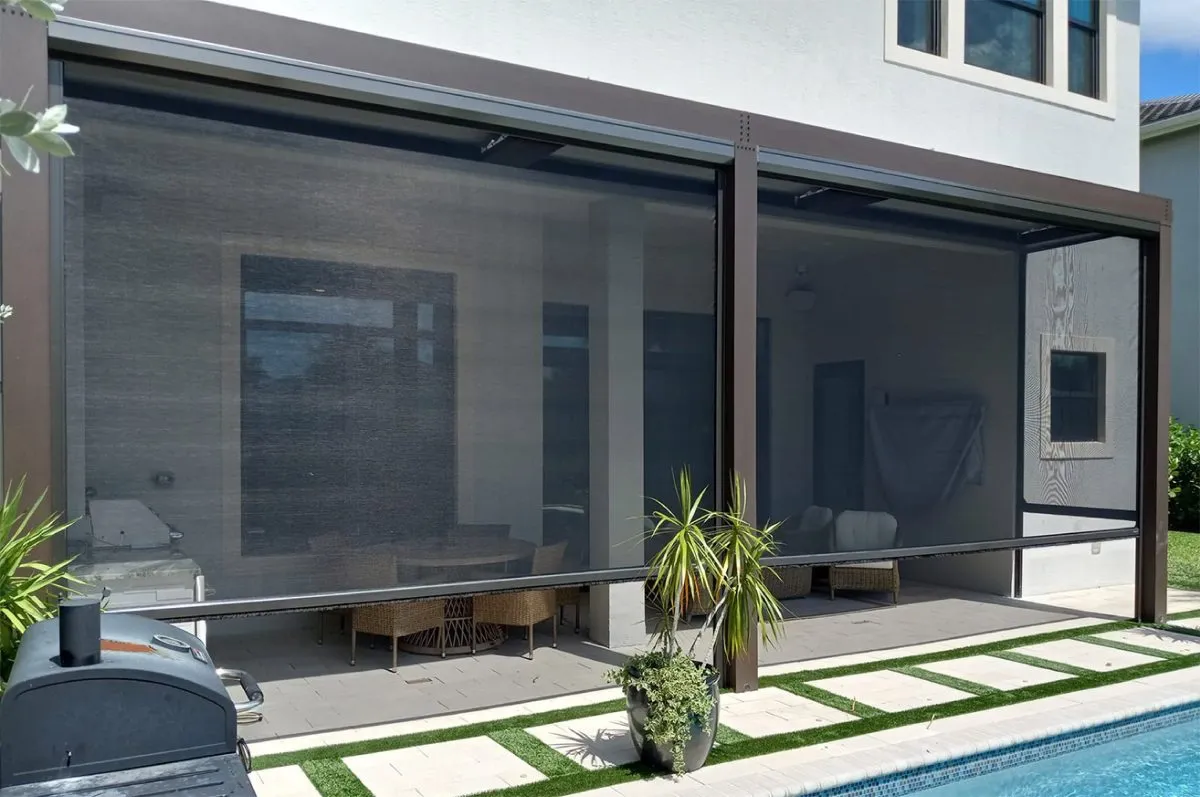
Properties along Lady Bird Lake and in Zilker Park adjacent neighborhoods often have deed restrictions or personal preferences requiring unobstructed sightlines. Retractable awnings and motorized shade screens preserve views when retracted while providing full protection during use. Cable-tensioned shade sails mounted at strategic angles can block overhead sun while maintaining horizontal views across the water. Consult with an installer experienced in lakefront properties to design a system that protects without sacrificing the view you paid premium prices to enjoy.
Frequently Asked Questions
How do I maintain my patio shade structure during Austin’s allergy seasons?
Austin’s notorious cedar and oak pollen accumulates on fabric shade surfaces, creating green-yellow staining that becomes permanent if left untreated. Clean your fabric shades monthly from December through May using a soft brush and mild soap solution—never pressure wash, which damages UV-protective coatings. Aluminum structures need only quarterly rinse-downs. Many Austin homeowners schedule professional cleanings twice yearly, coinciding with peak cedar fever season in January and oak pollen season in March.
Will a patio cover affect my Austin Energy bill during winter months?
Solid patio covers reduce passive solar heating during Austin’s mild winters, potentially increasing heating costs by 5-8% in January and February. However, louvered pergola systems and retractable awnings eliminate this concern entirely—you simply open the louvers or retract the fabric to capture free solar warmth on cool mornings. For fixed aluminum covers, the summer cooling savings of $240-$400 annually far outweigh the $30-$50 winter heating increase.
What patio shade options work best for homes near Lady Bird Lake with view preservation requirements?
Properties along Lady Bird Lake and in Zilker Park adjacent neighborhoods often have deed restrictions or personal preferences requiring unobstructed sightlines. Retractable awnings and motorized shade screens preserve views when retracted while providing full protection during use. Cable-tensioned shade sails mounted at strategic angles can block overhead sun while maintaining horizontal views across the water. Consult with an installer experienced in lakefront properties to design a system that protects without sacrificing the view you paid premium prices to enjoy.